Tuesday, 1 March 2016

Friday, 26 February 2016
Jacques Lacan - Psychoanalyst Case Study
The Mirror Stage
 Jacques Lacan theorised that when an infant, typically under the age of 6 months witnesses their own reflection in the mirror, they believe what they see to be superior to them by comparison. They therefore look up to this person that they see as they don't recognise the image as themselves. They then set out to parallel this image that they see.
This theory can be applied to the way women see the ideal being on a cinema screen, identifies them as a superior being and strives to replicate the image. This can lead to very potential harmful conditions such as body dysmorphia which could then lead to anorexia/bulimia. Unfortunately it gives the effect that the body types as seen on screen are unachievable which can leave you vulnerable to feels of self doubt an lack of confidence/self esteem.
The Theory of Lack
Lacan suggests that any sense of desire that we experience are somewhat unrealistic and are merely fatties which every individual feels they have to achieve . It is these desirable fantasies which drive individuals to do certain things/ say certain things etc. It is what motivates them to do the things they do. However he is not stating that it is impossible to fulfil these fantasies. He is in fact stating that if these fantasies were to be fulfilled then the lust of the individual will become even more difficult to fulfil and therefore will go on to live an empty life as all they will want will become more and more unreasonable. It is this kind of lack that exists in the mind that can go on to create problems such as addictions or unhealthy obsessions.
This theory has been translated into film text through out many years. Such film texts include: Stanley Kubrick's The Shining (1980), The Worlds End (2013), and Vertigo (1958).
 In The Shining, the films protagonist/anarchist Jack, along with his family, take on the job of minding a hotel during a snowstorm which isolates the characters during the period of around 7-8 months. During this period, Jack, a writer is attempting to finish writing a novel however, as the days turn into weeks, Jack's mental health starts to deteriorate. The more he realises that he is unable to overcome his writers block, the more aggressive and violent he acts towards his family, resulting in the attempted murder of both his own wife and son. This is a classic example of Lecan's theory of lack, as it becomes more evident to Jack, that his goals are less and less unlikely and will not be ultimately fulfilled, the obsession of his work turns into a murderous obsession in order to overcome the truth of his own failing.
There are many technical aspects shown during certain scenes in this film which support this theory. For example the repetitive nature of the film. Many scenes are shown to reveal that Jack is living the same routine of self torture, attempting to write day in and day out with no luck. This is conveyed by shooting similar scenes that are played over and over again as time progresses. The audio aspect supports this as the music becomes increasingly distressing as time goes on, signifying Jack's slowly deteriorating mental state. The music that can be heard is eerie in nature, at not at all pleasant to listen to which makes it all the more haunting. The set design of The Shining is also very specific as it acts as more of a labyrinth than a hotel which creates a very eerie and disorientating atmosphere. The halls are twisted with impossible corridor and windows that shouldn't exist. This is representative of Jack's mental state as he attempts to navigate his way around the hotel. This can be seen as a visual metaphor for his own internal psychological battle which he ultimately succumbs to.
'The Worlds End' tells the story of a depressed middle aged man who can't let go of his youth. He organises a trip to his home town in order to complete a pub crawl that he failed to complete when he was 18. Similarly, this film also represents the theory of Lack as his lust for being young again and taking back those good times puts him and his friends in danger. The incomplete pub crawl represents his unfulfilled life/transition from being a teenager into adulthood.
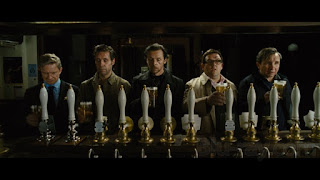
There are in fact countless cinematic examples that have been based around the theory of lack and human fulfilment, desires and the inmate human need. Despite the genre of the film, the film tends to centre around the wants and needs of the central characters.
However in lesser cases, this want or need has the potential to lead to an obsession with this person or thing. Or in fact exploring human infufilment. Once that original desire had been fulfilled people tend to move on or discover addition desires only for the cycle to continue throughout their life. This is why Lacan suggests that human satisfaction can never be achieved as people will just keep wanting more.
 Jacques Lacan theorised that when an infant, typically under the age of 6 months witnesses their own reflection in the mirror, they believe what they see to be superior to them by comparison. They therefore look up to this person that they see as they don't recognise the image as themselves. They then set out to parallel this image that they see.
This theory can be applied to the way women see the ideal being on a cinema screen, identifies them as a superior being and strives to replicate the image. This can lead to very potential harmful conditions such as body dysmorphia which could then lead to anorexia/bulimia. Unfortunately it gives the effect that the body types as seen on screen are unachievable which can leave you vulnerable to feels of self doubt an lack of confidence/self esteem.
The Theory of Lack
Lacan suggests that any sense of desire that we experience are somewhat unrealistic and are merely fatties which every individual feels they have to achieve . It is these desirable fantasies which drive individuals to do certain things/ say certain things etc. It is what motivates them to do the things they do. However he is not stating that it is impossible to fulfil these fantasies. He is in fact stating that if these fantasies were to be fulfilled then the lust of the individual will become even more difficult to fulfil and therefore will go on to live an empty life as all they will want will become more and more unreasonable. It is this kind of lack that exists in the mind that can go on to create problems such as addictions or unhealthy obsessions.
This theory has been translated into film text through out many years. Such film texts include: Stanley Kubrick's The Shining (1980), The Worlds End (2013), and Vertigo (1958).

There are many technical aspects shown during certain scenes in this film which support this theory. For example the repetitive nature of the film. Many scenes are shown to reveal that Jack is living the same routine of self torture, attempting to write day in and day out with no luck. This is conveyed by shooting similar scenes that are played over and over again as time progresses. The audio aspect supports this as the music becomes increasingly distressing as time goes on, signifying Jack's slowly deteriorating mental state. The music that can be heard is eerie in nature, at not at all pleasant to listen to which makes it all the more haunting. The set design of The Shining is also very specific as it acts as more of a labyrinth than a hotel which creates a very eerie and disorientating atmosphere. The halls are twisted with impossible corridor and windows that shouldn't exist. This is representative of Jack's mental state as he attempts to navigate his way around the hotel. This can be seen as a visual metaphor for his own internal psychological battle which he ultimately succumbs to.
'The Worlds End' tells the story of a depressed middle aged man who can't let go of his youth. He organises a trip to his home town in order to complete a pub crawl that he failed to complete when he was 18. Similarly, this film also represents the theory of Lack as his lust for being young again and taking back those good times puts him and his friends in danger. The incomplete pub crawl represents his unfulfilled life/transition from being a teenager into adulthood.

There are in fact countless cinematic examples that have been based around the theory of lack and human fulfilment, desires and the inmate human need. Despite the genre of the film, the film tends to centre around the wants and needs of the central characters.
However in lesser cases, this want or need has the potential to lead to an obsession with this person or thing. Or in fact exploring human infufilment. Once that original desire had been fulfilled people tend to move on or discover addition desires only for the cycle to continue throughout their life. This is why Lacan suggests that human satisfaction can never be achieved as people will just keep wanting more.
Monday, 8 February 2016
Wednesday, 13 January 2016
New Wave Film Planning: "Beer Goggles"
Making Effective Judgements
Originally, plans were made to travel to different urban areas to shoot footage that could potntially make it into my New Wave Film. The first destination was in Manchester where I planned to shoot footage of built up streets which would incorporate nicely into my film concept. The concept being a drunk individual wandering the streets trying to find his way home whilst questioning his concept of reality as he starts to see bizarre images and creatures along the way. Therefore some establishing shots in this built up metropolis would have worked very well. In the film I wanted the character to be portrayed as 'lost' in a sense, and the complex layout of Manchester made it much easier to convey.
However It was then decided that we would visit the Whitworth Art Gallery in Manchester. It was in here where I figured i could get some fairly abstract shots of different art pieces and settings which would match the tone I was looking for. The idea was to transpose this footage onto the footage that I was yet to shoot of my actor portraying the drunk person walking home. This was to make the film seem more surreal. I decided on establishing the tone of the film as surreal after watching example films of the Czech New Wave which I have been studying for this unit.


Research and Influence:
Whilst researching the Czechoslovakian new wave, I viewed 3 example films which really stood out to me and made a massive impact on how i perceive Cinema. There films were "Dasies" 'Valerie and her week of wonders" and "Morgiana" I took inspiration from all three of these films and decided to take elements that are present in each of these films and incorporate them into my own New Wave film. The idea of magic realism which was inspired by "Valerie" was planned to make an appearance in the final film. This related to the creatures that the character of my film was going to witness during his journey home. I was in need of shots of bizarre creatures and contemplated modelling my own and shooting them to appear larger than they actually are. However an area in Birmingham next to the Custard Factory in Digbeth presented presented large sculptures that I was able to include. These included a large lion's head as well as a giant tree man.
 Witworth Art Gallery
In regards to inspiration from Daisies, the different colour filters to express different emotions is the aspect that influenced my film. I used different digital effects in post production in order to produce the desired effect. I took inspiration from "Morgiana" in regards to the shot types, for example the introducing shot which was captured from the point of view of the dog. This emulates the shot in which the cat "morgiana" enters the room and jumps up onto chair next to one of the sisters.
Methods/Techniques
I ensured that the shots were filmed handheld in order to give it a disorientated feel which reflects the current state of the main character. This was also the only way to ensure it was possible to capture the majority of the shots effectively as well as practically, for example the point of view of the dog. I encountered issues with exposure whilst shooting, more namely the white-balance caused the shot to present an orange tint to the image due to the lack of lighting. Any other setting resulting in underexposure. Therefore I came to a compromise in which I added coloured filters to reflect the mood of the scene as well as distracting away from the poor white-balance effect. The colour filters were also influenced by the colour filters used in Daises in which they appeared fro time to time. This effect also gives the film a much more surrealist feel. I ended up shooting the film chronologically in just one day giving the single actor a very loose idea of what he is required to do. This was in hope that he appeared even more lost and disorientated. I contemplated on both the actor as well as the camera person to get drunk together before shooting to give it that genuine performance as well as off -putting disorientating and frustrating camera movement and angles. I also ensured that influences from new wave cinema would be identifiable in both the filming and editing process.
The result of all this can be seen in my final video entitled "Beer Goggles". I included many jump cuts in the final edit of the film as the takes could be seen as a little over-stretched which had the potential to bore the audience and become uninteresting. Luckily this suited the tone as well as the context of the film as it it gave it a more disorientating feel. Jump cuts were also used in the majority of the films I studied in this unit, most notably "Daises" (1966) in which the film would seem almost careless with the amount of sudden scene transitions without any explanation
or clearly apparent reason. This technique is also one of the main reasons that Daises appeared to have a very loose narrative structure. One that I wanted to replicate in this film. There is no existing diegetic sound within the film as I wanted to completely remove as many senses from the audience as I possibly could in order to emulate the condition of the key character of the film. I chose a song that felt very slurry and slow sounding to fit in with the context of the film.
Updated Design Brief
I encountered many problems during the production of this film. As mentioned before I chose to film some footage at various art museums. These shots included very vague locations and meanings which would have not only added to the films ascetic but would have also given it more of a theatrical feel. However I simply ran out of time when editing the film and therefore could not incorporate this into my footage. However I did take it upon myself to edit a very short draft including some of these clips. in this draft, the images make no cohesive sense however it was simply a playground for experimentation with ideas that could have potentially made it into the film. The aforementioned concept of the main character witnessing strange creatures as he stumbles home drunk was also scrapped as the footage I took of the "creatures" was incoherent with the setting of the film, for example the shots of the creatures were filmed during the day whereas the shots of the character walking home were shot at night, which obviously meant the shots contained completely different levels of exposure and would not have worked as a whole.
Challenges I Faced
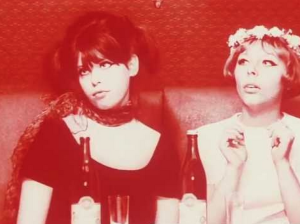
I had a serious problem with exposure during the shooting of this film. I completely incorrectly calibrated the white balance during some of the shots which gave the film a horrible orangey look to them. This was also due to the fact I didn't bring an LED light which would have massively helped with the exposure of the shot. However I found a solution within the colour grading/correcting tool during the editing process. I attempted to manipulate the i age to remove the orange tone from the hot however this did not completely satisfy. The image still unnatural and too heavily edited. Then I came to another solution which included using different coloured filters for certain shots so the orange looking shots wouldn't look out of place. The different coloured filters were inspired from Daisies which contained many different shots with many different colour filters, which can be seen in the image posted above. Therefore i emulated this technique.
Originally, plans were made to travel to different urban areas to shoot footage that could potntially make it into my New Wave Film. The first destination was in Manchester where I planned to shoot footage of built up streets which would incorporate nicely into my film concept. The concept being a drunk individual wandering the streets trying to find his way home whilst questioning his concept of reality as he starts to see bizarre images and creatures along the way. Therefore some establishing shots in this built up metropolis would have worked very well. In the film I wanted the character to be portrayed as 'lost' in a sense, and the complex layout of Manchester made it much easier to convey.
However It was then decided that we would visit the Whitworth Art Gallery in Manchester. It was in here where I figured i could get some fairly abstract shots of different art pieces and settings which would match the tone I was looking for. The idea was to transpose this footage onto the footage that I was yet to shoot of my actor portraying the drunk person walking home. This was to make the film seem more surreal. I decided on establishing the tone of the film as surreal after watching example films of the Czech New Wave which I have been studying for this unit.


Research and Influence:
Whilst researching the Czechoslovakian new wave, I viewed 3 example films which really stood out to me and made a massive impact on how i perceive Cinema. There films were "Dasies" 'Valerie and her week of wonders" and "Morgiana" I took inspiration from all three of these films and decided to take elements that are present in each of these films and incorporate them into my own New Wave film. The idea of magic realism which was inspired by "Valerie" was planned to make an appearance in the final film. This related to the creatures that the character of my film was going to witness during his journey home. I was in need of shots of bizarre creatures and contemplated modelling my own and shooting them to appear larger than they actually are. However an area in Birmingham next to the Custard Factory in Digbeth presented presented large sculptures that I was able to include. These included a large lion's head as well as a giant tree man.

In regards to inspiration from Daisies, the different colour filters to express different emotions is the aspect that influenced my film. I used different digital effects in post production in order to produce the desired effect. I took inspiration from "Morgiana" in regards to the shot types, for example the introducing shot which was captured from the point of view of the dog. This emulates the shot in which the cat "morgiana" enters the room and jumps up onto chair next to one of the sisters.
Methods/Techniques
I ensured that the shots were filmed handheld in order to give it a disorientated feel which reflects the current state of the main character. This was also the only way to ensure it was possible to capture the majority of the shots effectively as well as practically, for example the point of view of the dog. I encountered issues with exposure whilst shooting, more namely the white-balance caused the shot to present an orange tint to the image due to the lack of lighting. Any other setting resulting in underexposure. Therefore I came to a compromise in which I added coloured filters to reflect the mood of the scene as well as distracting away from the poor white-balance effect. The colour filters were also influenced by the colour filters used in Daises in which they appeared fro time to time. This effect also gives the film a much more surrealist feel. I ended up shooting the film chronologically in just one day giving the single actor a very loose idea of what he is required to do. This was in hope that he appeared even more lost and disorientated. I contemplated on both the actor as well as the camera person to get drunk together before shooting to give it that genuine performance as well as off -putting disorientating and frustrating camera movement and angles. I also ensured that influences from new wave cinema would be identifiable in both the filming and editing process.

The result of all this can be seen in my final video entitled "Beer Goggles". I included many jump cuts in the final edit of the film as the takes could be seen as a little over-stretched which had the potential to bore the audience and become uninteresting. Luckily this suited the tone as well as the context of the film as it it gave it a more disorientating feel. Jump cuts were also used in the majority of the films I studied in this unit, most notably "Daises" (1966) in which the film would seem almost careless with the amount of sudden scene transitions without any explanation
or clearly apparent reason. This technique is also one of the main reasons that Daises appeared to have a very loose narrative structure. One that I wanted to replicate in this film. There is no existing diegetic sound within the film as I wanted to completely remove as many senses from the audience as I possibly could in order to emulate the condition of the key character of the film. I chose a song that felt very slurry and slow sounding to fit in with the context of the film.
Updated Design Brief
I encountered many problems during the production of this film. As mentioned before I chose to film some footage at various art museums. These shots included very vague locations and meanings which would have not only added to the films ascetic but would have also given it more of a theatrical feel. However I simply ran out of time when editing the film and therefore could not incorporate this into my footage. However I did take it upon myself to edit a very short draft including some of these clips. in this draft, the images make no cohesive sense however it was simply a playground for experimentation with ideas that could have potentially made it into the film. The aforementioned concept of the main character witnessing strange creatures as he stumbles home drunk was also scrapped as the footage I took of the "creatures" was incoherent with the setting of the film, for example the shots of the creatures were filmed during the day whereas the shots of the character walking home were shot at night, which obviously meant the shots contained completely different levels of exposure and would not have worked as a whole.
Challenges I Faced
I had a serious problem with exposure during the shooting of this film. I completely incorrectly calibrated the white balance during some of the shots which gave the film a horrible orangey look to them. This was also due to the fact I didn't bring an LED light which would have massively helped with the exposure of the shot. However I found a solution within the colour grading/correcting tool during the editing process. I attempted to manipulate the i age to remove the orange tone from the hot however this did not completely satisfy. The image still unnatural and too heavily edited. Then I came to another solution which included using different coloured filters for certain shots so the orange looking shots wouldn't look out of place. The different coloured filters were inspired from Daisies which contained many different shots with many different colour filters, which can be seen in the image posted above. Therefore i emulated this technique.
Monday, 11 January 2016
Sigmund Freud: Case Study - The Id, Ego and Superego
The Id, Ego and Superego
Sigmund Freud conceived a theory which entailed that the human psyche (personality) has more than one aspect to it. He then saw it as made up of three parts, titled "The ID, Ego and Superego" and suggested these three parts develop individually at different stages of our life.

"The Id"
The Id consists of the primitive and instinctive aspect of the human psyche. Anything inherited or biological regarding to the persons personality such as the sex instinct as well as the instinct to become violent/aggressive towards someone who poses as a dangerous threat. It is the impulsive side to us that responds immediately and directly to the stimulus experienced. For example the personality of a new born child consists of all Id and develops a super ego and an ego later on in life.
The id allows us to feel pleasure when the natural impulse is fulfilled. However if it is not fulfilled then you are to experience pain or discomfort. The Id abides by the pleasure principle which entails fulfilling a desire immediately after feeling the urge regardless of the outcome or consequence.
"The Ego"
The ego acts as the balancing point between the Id and the superego. It develops to act as a restrainer of the Id so that you aren't susceptible to the impulses that envelop from the Id. To put in other words, the ego is the voice of reason.
The ego works on the "reality principle" which means it often satisfies the impulses of the Id whilst simultaneously compromising/postponing this urge based on social norms. Like the id the ego seeks pleasure and avoids pain however the ego contemplates a realistic view of how this pleasure would be obtained.
The ego is weak in comparison to the id, which means although the ego is not in complete control, it is able to point the Id in the right direction of where it wants to go.
The ego maintains to concept of right and wrong. As long as the pleasure is achieved and no harm has been done to it during the process then the ego credits this as a success.
"The SuperEgo"
The SuperEgo incorporates morals and social values into the thinking process. These are the morals that we learn from our parents during childhood. The superego develops around the ages of 3-5 years old, during the phallic stage of psychosexual development.
The superego is more of a perfectionist than the ego. It attempts to make sure the ego abides to the more moralistic goals rather than simply the realistic ones. Like the ego, it controls the Id's impulses to maintain a certain standard. This includes restricting sex and aggression.
The superego consists of two parts, the "conscience" and "the ideal self". The conscience can make the ego feel bad by giving in to the demands of the Id. The superego supplies the feelings of guilt if this were to occur. The ideal-self is the imaginary image of how you are supposed to be, or how you are expected top behave within society.
behaviour which doesn't meet the standard of the idea self will be punished by the super ego through guilt. On the other hand, the superego also rewards, if behaviour reaches the standards of the ideal self, by making you feel proud.
If the ideal self is of too high a standard then then it is much more difficult to achieve the standards set and therefore will always represent failure.
The ideal self and conscience are largely determined during adolescence as well as through parental values you learn whilst growing up.
Sigmund Freud conceived a theory which entailed that the human psyche (personality) has more than one aspect to it. He then saw it as made up of three parts, titled "The ID, Ego and Superego" and suggested these three parts develop individually at different stages of our life.

"The Id"
The Id consists of the primitive and instinctive aspect of the human psyche. Anything inherited or biological regarding to the persons personality such as the sex instinct as well as the instinct to become violent/aggressive towards someone who poses as a dangerous threat. It is the impulsive side to us that responds immediately and directly to the stimulus experienced. For example the personality of a new born child consists of all Id and develops a super ego and an ego later on in life.
The id allows us to feel pleasure when the natural impulse is fulfilled. However if it is not fulfilled then you are to experience pain or discomfort. The Id abides by the pleasure principle which entails fulfilling a desire immediately after feeling the urge regardless of the outcome or consequence.
"The Ego"
The ego acts as the balancing point between the Id and the superego. It develops to act as a restrainer of the Id so that you aren't susceptible to the impulses that envelop from the Id. To put in other words, the ego is the voice of reason.
The ego works on the "reality principle" which means it often satisfies the impulses of the Id whilst simultaneously compromising/postponing this urge based on social norms. Like the id the ego seeks pleasure and avoids pain however the ego contemplates a realistic view of how this pleasure would be obtained.
The ego is weak in comparison to the id, which means although the ego is not in complete control, it is able to point the Id in the right direction of where it wants to go.
The ego maintains to concept of right and wrong. As long as the pleasure is achieved and no harm has been done to it during the process then the ego credits this as a success.
"The SuperEgo"
The SuperEgo incorporates morals and social values into the thinking process. These are the morals that we learn from our parents during childhood. The superego develops around the ages of 3-5 years old, during the phallic stage of psychosexual development.
The superego is more of a perfectionist than the ego. It attempts to make sure the ego abides to the more moralistic goals rather than simply the realistic ones. Like the ego, it controls the Id's impulses to maintain a certain standard. This includes restricting sex and aggression.
The superego consists of two parts, the "conscience" and "the ideal self". The conscience can make the ego feel bad by giving in to the demands of the Id. The superego supplies the feelings of guilt if this were to occur. The ideal-self is the imaginary image of how you are supposed to be, or how you are expected top behave within society.
behaviour which doesn't meet the standard of the idea self will be punished by the super ego through guilt. On the other hand, the superego also rewards, if behaviour reaches the standards of the ideal self, by making you feel proud.
If the ideal self is of too high a standard then then it is much more difficult to achieve the standards set and therefore will always represent failure.
The ideal self and conscience are largely determined during adolescence as well as through parental values you learn whilst growing up.
Thursday, 7 January 2016
New wave Film Planning: "Beer Goggles"
Pre-Shoot:
I wanted to very much intend for the film to look like a very rough piece of work however presenting a different array of shot types and still maintaining a high standard.
Shooting:
As mentioned in my previous planning post, I wanted to include elements of the natural world such as unworldly creatures and magic realism. Therefore whilst I was in certain areas of Manchester and Birmingham, i shot footage of bizarre sculptures which represented the creatures i wished to integrate into the narrative of the film.
Editing:
It became evident during the editing process that due to practicality reasons, I was unable to use the footage shot in Birmingham and Manchester. This was because the footage at those locations was shot during the day, and the film was finally decided to be shot a night as it fit the narrative of the film much better. I attempted to manipulate the footage to make it appear as if it was shot during the night however this effect was not convincing enough and looked very out of place to the rest of the film. I then decided to use items and statues around the location of the actual shoot, in Nuneaton town centre and have the main character react to ordinary items as if they are from other world to compensate for the missing of the original concept. If i had more time to shoot I would have defiantly reshot the originally intended footage as I wanted to reflect on the Czech New Wave movement which I have been studying, as much as possible. I did however emulate the Czech new wave further in the editing process,for example I used different coloured filters for certain individual shots which resembled the technique used in certain scenes of "Daisies" (1966)
I wanted to very much intend for the film to look like a very rough piece of work however presenting a different array of shot types and still maintaining a high standard.
Shooting:
As mentioned in my previous planning post, I wanted to include elements of the natural world such as unworldly creatures and magic realism. Therefore whilst I was in certain areas of Manchester and Birmingham, i shot footage of bizarre sculptures which represented the creatures i wished to integrate into the narrative of the film.
Editing:
It became evident during the editing process that due to practicality reasons, I was unable to use the footage shot in Birmingham and Manchester. This was because the footage at those locations was shot during the day, and the film was finally decided to be shot a night as it fit the narrative of the film much better. I attempted to manipulate the footage to make it appear as if it was shot during the night however this effect was not convincing enough and looked very out of place to the rest of the film. I then decided to use items and statues around the location of the actual shoot, in Nuneaton town centre and have the main character react to ordinary items as if they are from other world to compensate for the missing of the original concept. If i had more time to shoot I would have defiantly reshot the originally intended footage as I wanted to reflect on the Czech New Wave movement which I have been studying, as much as possible. I did however emulate the Czech new wave further in the editing process,for example I used different coloured filters for certain individual shots which resembled the technique used in certain scenes of "Daisies" (1966)
Wednesday, 6 January 2016
Subscribe to:
Comments (Atom)